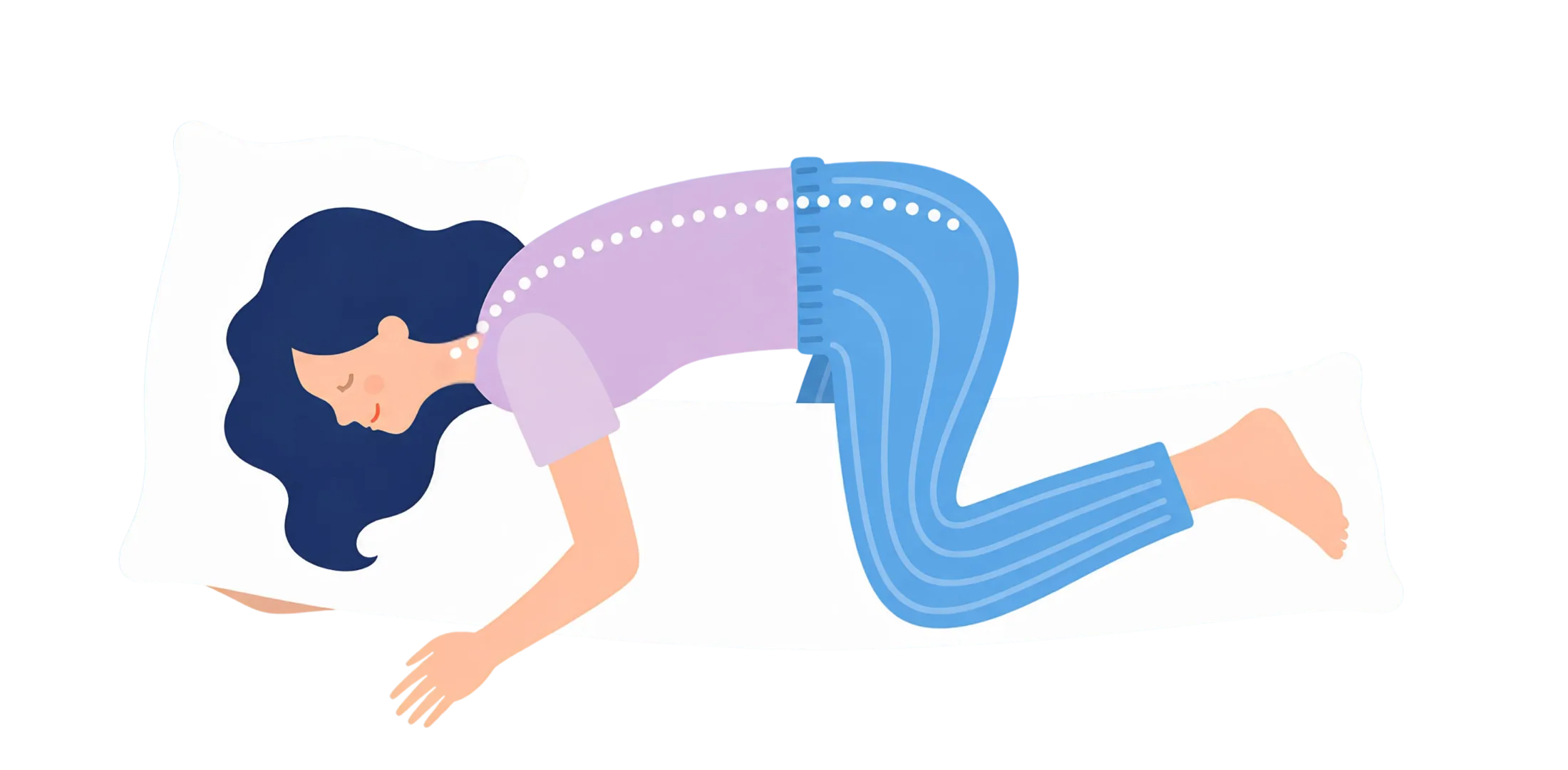
5 Bedtime Fixes That Stop Tossing and Turning
Five practical ways to settle your body, quiet your mind, and stay comfortable through the night.

Key Takeaways
- Cooler rooms, calmer routines, and a simple brain dump can reduce restlessness.
- Proper body support matters most when your sleep position creates pressure points.
- Evening caffeine, heavy meals, and late liquids can keep your body from settling.
Do you toss and turn in bed, unable to get comfortable no matter how many times you flip your pillow or adjust your position?
According to sleep experts, frequent nighttime movement is one of the most common complaints among poor sleepers.
And here's the problem:
Constant shifting prevents your body from reaching the deep, restorative sleep stages you need to feel refreshed at sunrise.
Not anymore.
Because in this post, we're going to share five proven fixes to help you put an end to tossing and turning… so you can get the quality sleep you deserve.
1. Cool Down Your Bedroom Temperature
Your core body temperature naturally drops at night, which signals your body that it's time to fall asleep.
But if your bedroom is too hot? Your body can't reach its ideal sleep temperature.
In turn, this causes restlessness and frequent position changes as you search for a cool spot on your pillow or mattress.
The Bedtime Fix: Optimize Your Sleeping Temperature
Sleep experts recommend keeping your bedroom between 60-67°F (15-19°C) for optimal sleep. Here's how to cool things down:
- Set your thermostat lower an hour before bed
- Use breathable, temperature-regulating bedding like cotton or bamboo sheets
- Choose moisture-wicking pillowcases that don't trap heat
- Keep a fan running for air circulation
- Take a warm shower 60-90 minutes before bed – the sudden loss of heat rapidly cools the body and triggers sleepiness
If you tend to sleep hot, investing in cooling bedding materials can make the difference between tossing all night and sleeping soundly.
2. Introduce A "Wind-Down" Routine
Going to bed with an active mind is a surefire way to delay sleep. Your mind needs time to transition from alert mode to sleep mode. Without this buffer period, your brain can race like crazy as it processes the day's events, plans tomorrow's tasks, or simply thinks up random thoughts you can't ignore.
The Bedtime Fix: Create a 30-Minute Pre-Sleep Ritual
A wind-down routine before bed signals to your body and mind that it's time to prepare for sleep. Here's an effective routine:
60 minutes before bed:
- Dim the lights throughout your home
- Put away phones, tablets, and computers
- Set the thermostat lower
30 minutes before bed:
- Engage in calming activities: reading, gentle stretching, or listening to soft music
- Follow your hygiene routines (brush teeth, wash face, etc.)
- Prepare your bedroom: draw curtains, fluff pillows, turn down covers
10 minutes before bed:
- Do a final "brain dump" (see fix #3)
- Practice deep breathing or progressive muscle relaxation
Consistency is key. When you follow the same routine every night, your body learns to anticipate sleep, making it easier to drift off without restless tossing.
Designed for the way side sleepers actually rest
Meet the L-Pillow your spine has been asking for
Head, neck, and knee support in one doctor-designed pillow that stays with you through the night.
Shop the L-Pillow
3. Quiet Your Mind With a Brain Dump
As mentioned, mental restlessness is a major culprit of tossing and turning. Worrying about tomorrow's presentation, replaying today's conversations, or mentally reviewing your to-do list can stimulate adrenaline, which keeps your body and mind awake longer than necessary.
The Bedtime Fix: Get Thoughts Out of Your Head
Keep a notepad and pen on your nightstand. Before you turn off the lights, spend 5-10 minutes doing a "brain dump":
- Write down tasks: Everything you need to do tomorrow or this week
- List worries: Concerns that are keeping you anxious
- Note ideas: Random thoughts or ideas floating around your mind
- Identify what you can't control: Acknowledge worries you can't solve tonight
Getting thoughts out of your head and onto paper creates mental closure. You've acknowledged these items—they're written down so you won't forget—and now your brain can let them go.
4. Give Your Body Proper Support
Most people toss and turn because their body is unconsciously searching for a comfortable position. If you're a side sleeper, the natural gap between your head and mattress, the space between your knees, and lack of arm support create pressure points throughout the night.
Your body responds by constantly shifting, trying to relieve discomfort even while you're asleep.
The Bedtime Fix: Strategic Pillow Placement
Proper sleep position support can dramatically reduce nighttime movement. Here's what works:
- For side sleepers: Use a pillow between your knees to keep your hips aligned and reduce lower back pressure
- For back sleepers: Place a pillow under your knees to maintain the natural curve of your spine
- For stomach sleepers: Use a thin pillow (or no pillow) under your head and a flat pillow under your pelvis
Better yet, invest in the snuggL L-Pillow, which has been specifically designed for side sleepers.
This 3-in-1 pillow supports your head, neck, and knees simultaneously, keeping your spine properly aligned all night long. When your body is comfortable and supported, there's no need to constantly adjust.
5. Use The "3-2-1 Rule"
That evening coffee might seem harmless at 7 PM, but caffeine has a half-life of 5-6 hours. That means half your coffee is still in your system at 1am. Similarly, eating a heavy dinner close to bedtime forces your body to focus on digestion instead of sleep. Even alcohol, while it might make you drowsy initially, disrupts sleep quality in the second half of the night.
The Bedtime Fix: Follow the 3-2-1 Rule
Structure your evening intake with these simple guidelines:
3 hours before bed: Stop caffeine
- No coffee, tea, energy drinks, or chocolate
- If you're caffeine-sensitive, make this 6+ hours
2 hours before bed: Finish eating
- Complete your last meal with time to digest
- Avoid heavy, spicy, or acidic foods that can cause discomfort
- Light snacks (like a small piece of fruit) are fine if needed
1 hour before bed: Stop drinking liquids
- Minimize bathroom trips that disrupt sleep
- Take final sips of water if needed for medication
Following this simple timeline lets your body focus on sleep instead of processing stimulants, digesting food, or waking you for bathroom breaks.
Stop Tossing and Turning Tonight
Tossing and turning doesn't have to be your nightly reality. These five bedtime fixes address the most common causes of restless sleep: from poor alignment and high temperatures to racing thoughts and taking late-night stimulants.
The key is to start with fixes that resonate most with your situation and implement them consistently for a week. You'll likely notice improvement within just a few nights.
For many people, this means starting with proper sleep support. Explore our collection of ergonomically designed body pillows that keep your spine aligned and your body comfortable all night long.
Remember: quality sleep is essential for your physical health, mental clarity, and overall well-being. When you stop tossing and turning and start sleeping soundly, everything else in your life improves.
Sweet dreams 😴
Designed for the way side sleepers actually rest
Meet the L-Pillow your spine has been asking for
Head, neck, and knee support in one doctor-designed pillow that stays with you through the night.
Shop the L-PillowAuthor
snuggL Editorial
Sleep education from the snuggL team, focused on side-sleeper comfort, pillow support, and practical ways to wake up feeling better.